
We design and manufacture AR coatings for lenses, windows and imaging optics, reducing surface reflection and increasing transmission. Single-layer, laser-line, dual-band and broadband designs are available for different wavelength and substrate requirements.
Our custom AR coatings cover 193 nm to 15 μm. Substrate options include BK7, fused silica, sapphire, calcium fluoride, germanium, silicon, chalcogenide glass, zinc selenide and zinc sulfide.
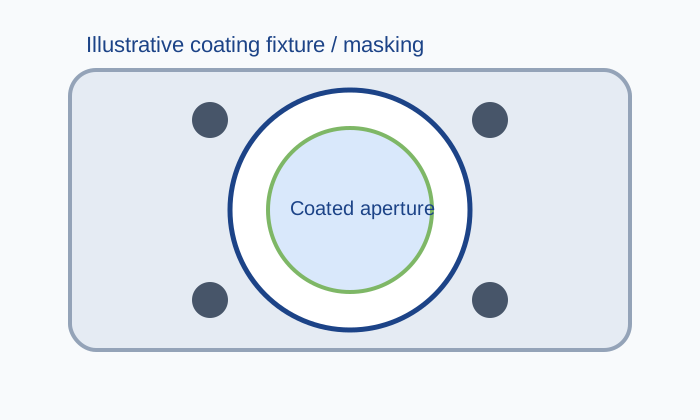
For our 0.3–2.5 μm coating service, substrate sizes range from 3–480 mm. Coated apertures extend to 1 mm from the edge; smaller apertures can be defined by the component drawing. We coat both our own components and customer-supplied substrates.
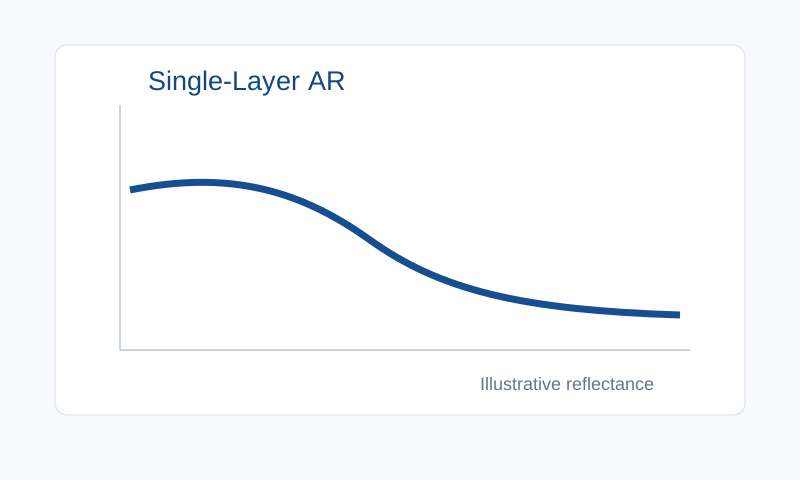
A single dielectric layer; reflection generally below 1.5%, depending on the refractive indices of the substrate and coating material.
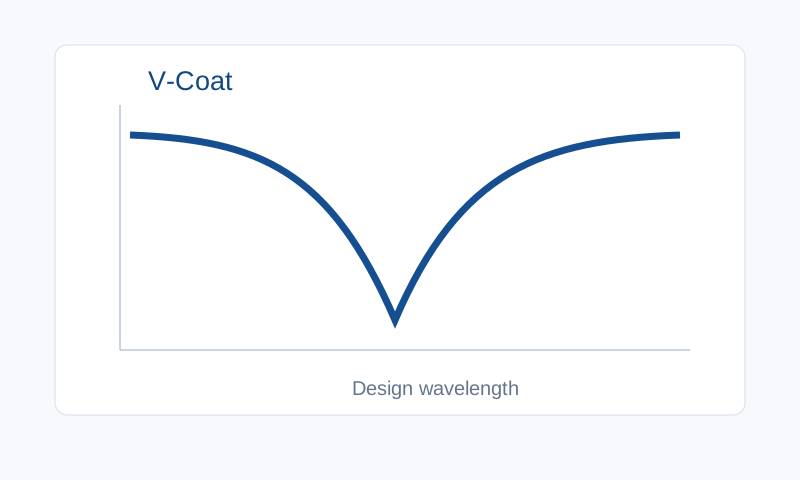
Typically a two-layer design for one operating wavelength, with absolute reflectance typically below 0.15%. Design examples include 632, 1064 and 1550 nm.
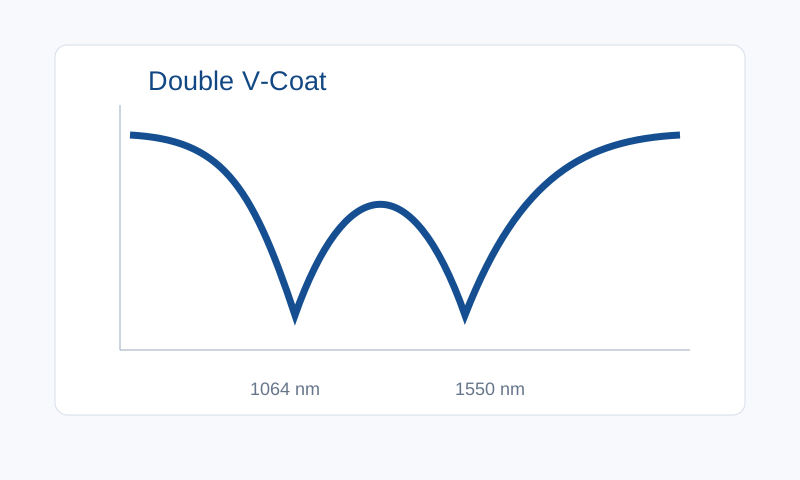
Multilayer dielectric designs reduce reflection at two wavelengths, with typical absolute reflectance below 0.2% at both bands. A design example combines 1064 and 1550 nm.
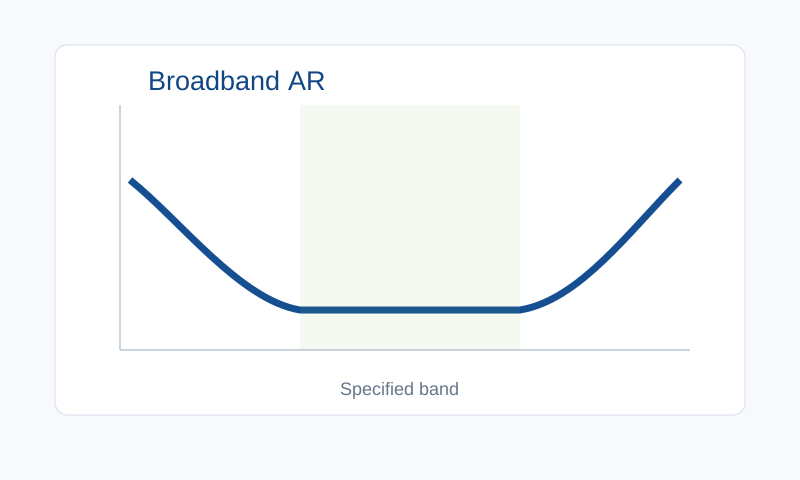
Multilayer coatings reduce reflection across a specified wavelength band, with typical average reflectance below 0.5%. The operating band is defined for each design.
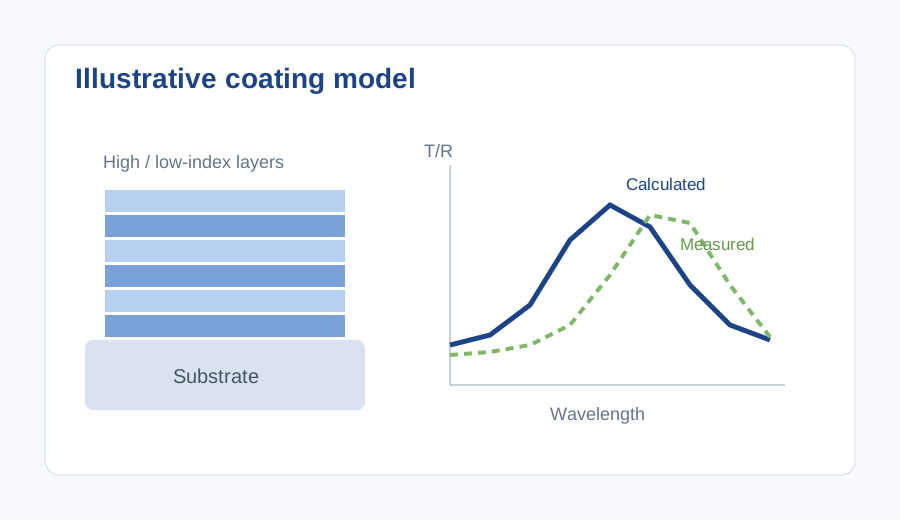
We use OptiLayer, FilmStar and TFCalc to develop multilayer coatings and provide theoretical spectral curves during quotation and development. Customer-supplied spectral data can also be used to model a coating.
Our AR deposition options include magnetron sputtering, ion-assisted electron-beam deposition and resistance evaporation. We design and CNC-machine custom coating fixtures, with fit checks before use. During deposition, we monitor material and layer behavior and control chamber parameters for repeatability.
Selected AR designs achieve reflection below 0.1% at incidence angles up to 50°. Acceptance requirements are defined for the specified wavelength, substrate and polarization.
Our environmental testing capability spans −192°C to +500°C; test conditions are agreed for each coating and substrate, rather than treated as a universal operating-temperature rating.

For UV–VIS–NIR coatings, we measure transmission and reflection with polarization capability and provide measured spectral curves and raw data. Variable-angle absolute reflectance testing covers 10°–70°. Coatings outside this measurement range require a separately agreed verification method.
| Spectral Range | Absolute Reflectance AOI | Polarization |
|---|---|---|
| 200–3200 nm | 10°–70° | S / P |
Send the wavelength or band, reflection target, substrate, dimensions, AOI, polarization and quantity. Typical lead time for most custom projects is 4–6 weeks.