
Optical components need to maintain their performance through temperature changes, moisture exposure and routine handling. Our environmental and durability testing supports filters and coated optics used in continuously operating instruments and demanding field environments.
We combine thermal testing, coating-durability assessment and application-specific qualification to evaluate the finished component. Testing follows the relevant optical construction and acceptance requirements, with documented results to support your project.
Our thermal testing capability extends from −192°C to +500°C, supporting cryogenic evaluation and elevated-temperature exposure. Temperature cycling, humidity exposure and thermal-shock testing provide different ways to assess environmental performance.
Additional capabilities include:
The temperature range describes testing capability; the qualified operating range is established for the individual optical component.
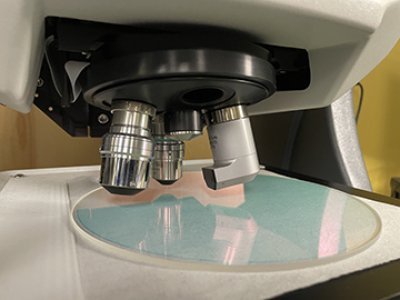
These methods address different aspects of durability. We select the test program for the coating and component construction.
For our all-dielectric filter designs, typical operating conditions are −40°C to +70°C and 0–100% RH, non-condensing. Typical storage conditions extend from −100°C to +200°C, also at 0–100% RH, non-condensing.
Filters can exhibit small spectral shifts with temperature. For applications with tight wavelength or edge-position tolerances, we develop the coating to meet specification at the intended temperature. Metal-containing coatings, laminated constructions and absorption-glass hybrids are evaluated separately.
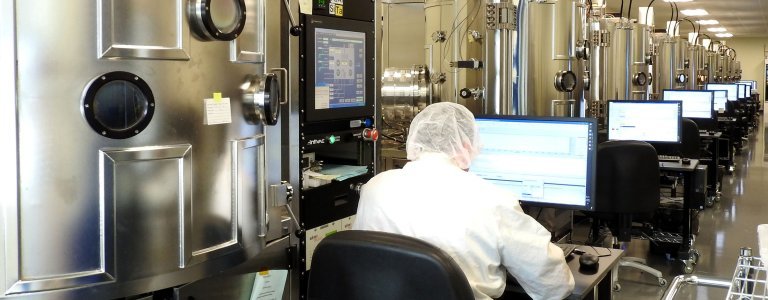
Our engineering team develops specialized test procedures for requirements beyond standard qualification methods. This supports projects with unusual thermal profiles, different coating constructions or customer-specific acceptance criteria.
We provide test documentation and traceability for the qualification work, with procedures developed around the agreed requirements.
Whether your optical component will operate inside an instrument or face changing outdoor conditions, we can support its environmental qualification. Our team brings coating development and testing together to address the durability requirements of your application.