
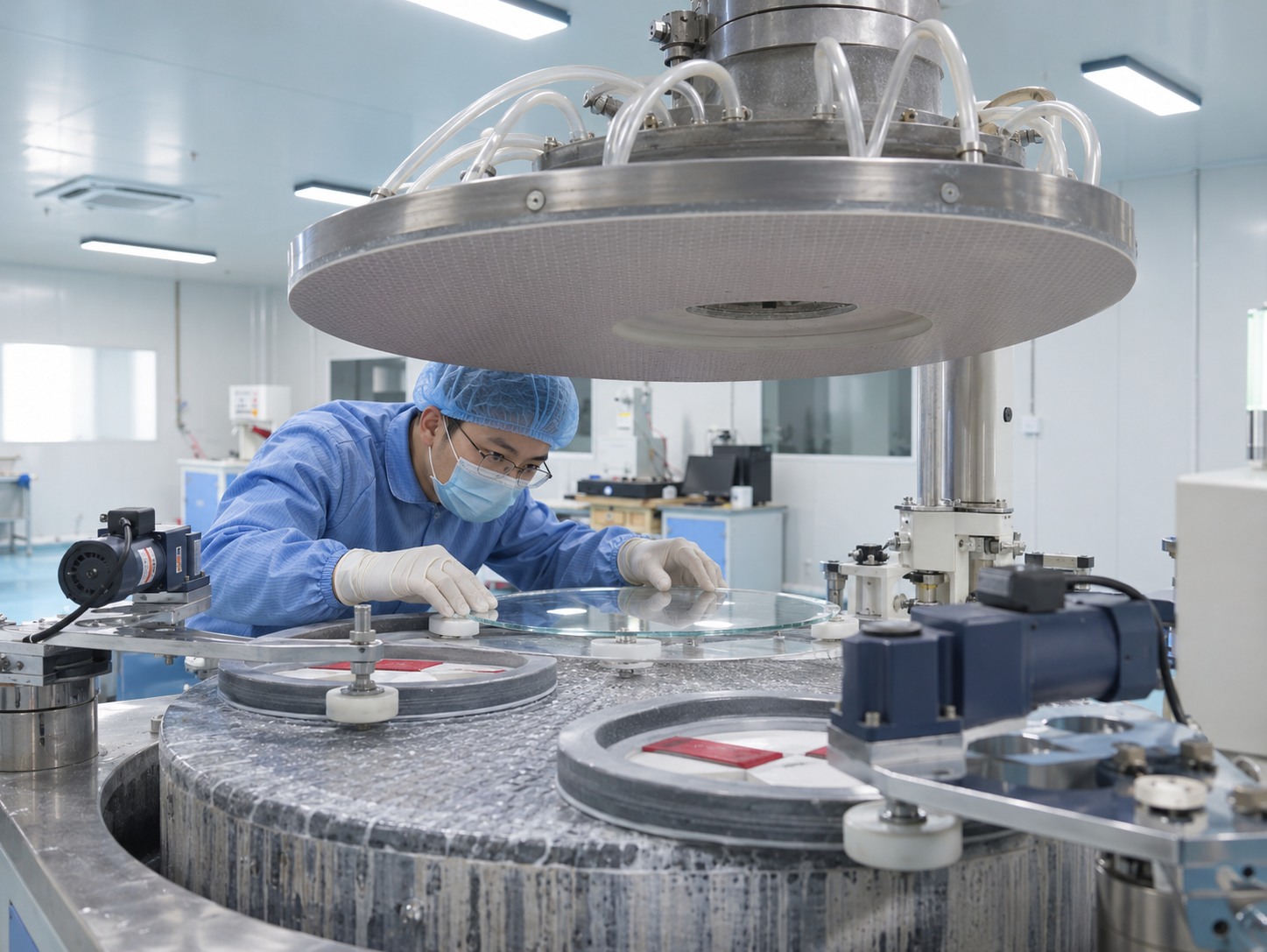
 PB01 · IMAGE PENDINGOperator checking a substrate at a polishing machine
Optical Glass Fabrication
Cut, shaped and polished in-house, from raw glass
Before a filter is coated, it is a piece of glass, and its flatness, finish and size decide much of how well it will perform. We are a glass company first: we cut, shape and polish optical glass, fused silica and sapphire in-house, both as the base for our own filters and as finished substrates and windows for customers who coat their own.
From Sheet to Finished Substrate
Cutting and Dicing
Sheet glass and coated plates cut to rounds, squares and custom outlines.
Shaping and Edging
CNC shaping, coring, chamfering and edge finishing to your drawing.

Grinding and Polishing
Flat, parallel surfaces polished to optical finish on both sides.
Cleaning and Inspection
Every part cleaned and checked for size, surface and defects before coating or shipping.
Our shop runs 5-axis and 3- and 4-axis CNC machining centers, diamond surface grinders, single- and double-sided polishers, double-sided diamond lappers and automated centering machines for beveling.
Why Glass and Coating Belong Together
Most filter makers buy their substrates. We make ours, and that changes three things for you.
Supply: because we hold the raw glass, a design can move from prototype to volume without waiting on a substrate supplier, and a repeat order uses the same material as the first.
Quality: a scratch or a poorly cleaned surface ruins a coating. When the same team polishes, cleans and coats, the surface that goes into the chamber is the one we meant to coat.
Flexibility
Thickness, shape and material can change without a new supplier in the chain. Need a thinner filter, a D-cut edge or sapphire instead of glass? We can quote it as one part.

Materials We Work With

JGS1 Fused Silica
Transmits 93% or more from 200 to 2,500 nm. For deep UV, high laser power and low thermal expansion.
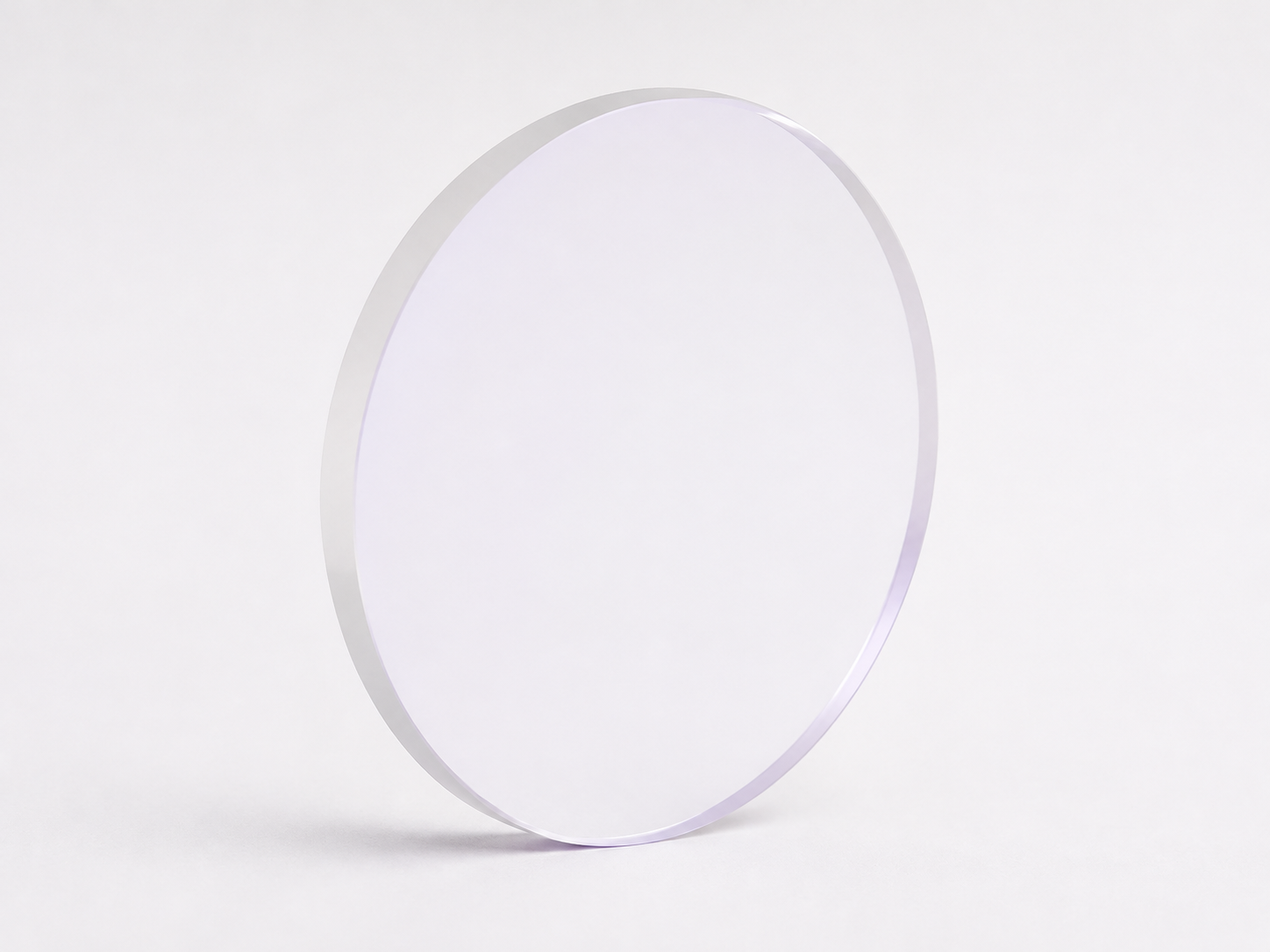
JGS2 Fused Silica
Transmits 93% or more from 250 to 2,500 nm. The economical fused silica for UV-visible work.
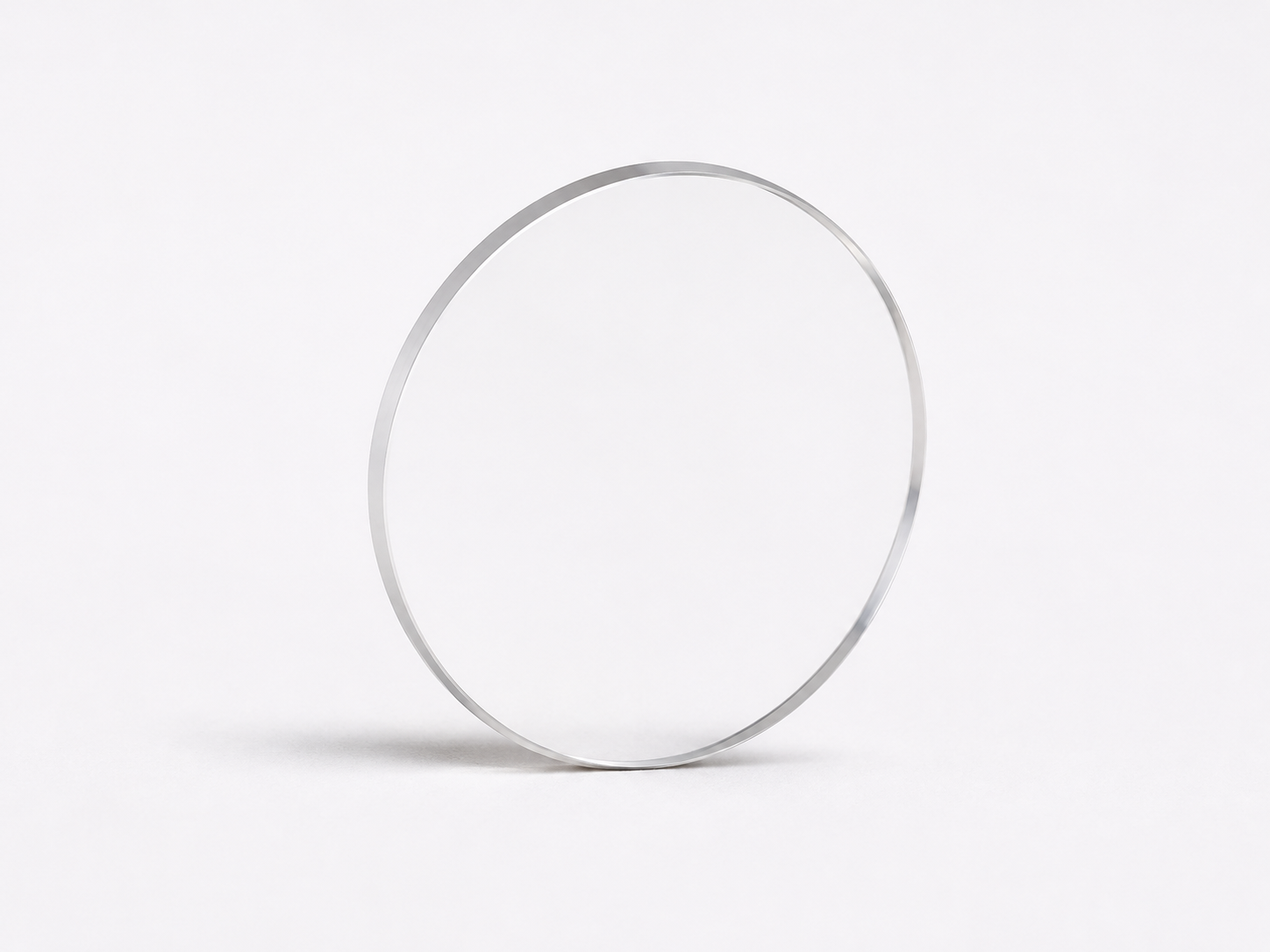
Sapphire
Transmits 85% or more from 350 to 3,000 nm and is much harder than glass. For scratch-prone and harsh environments.
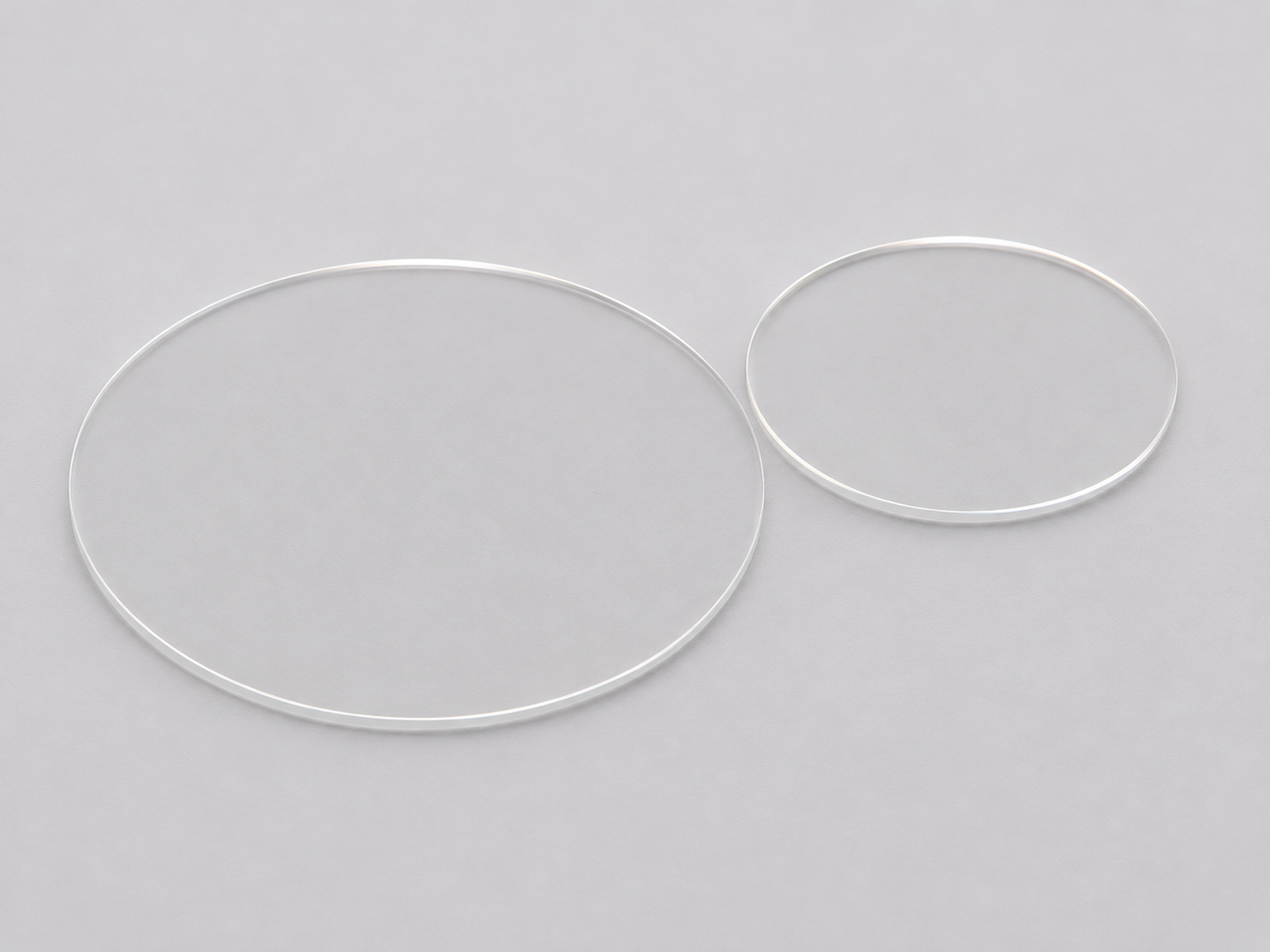
Borosilicate (BF33)
Low thermal expansion and good chemical resistance, transmitting from 350 nm.
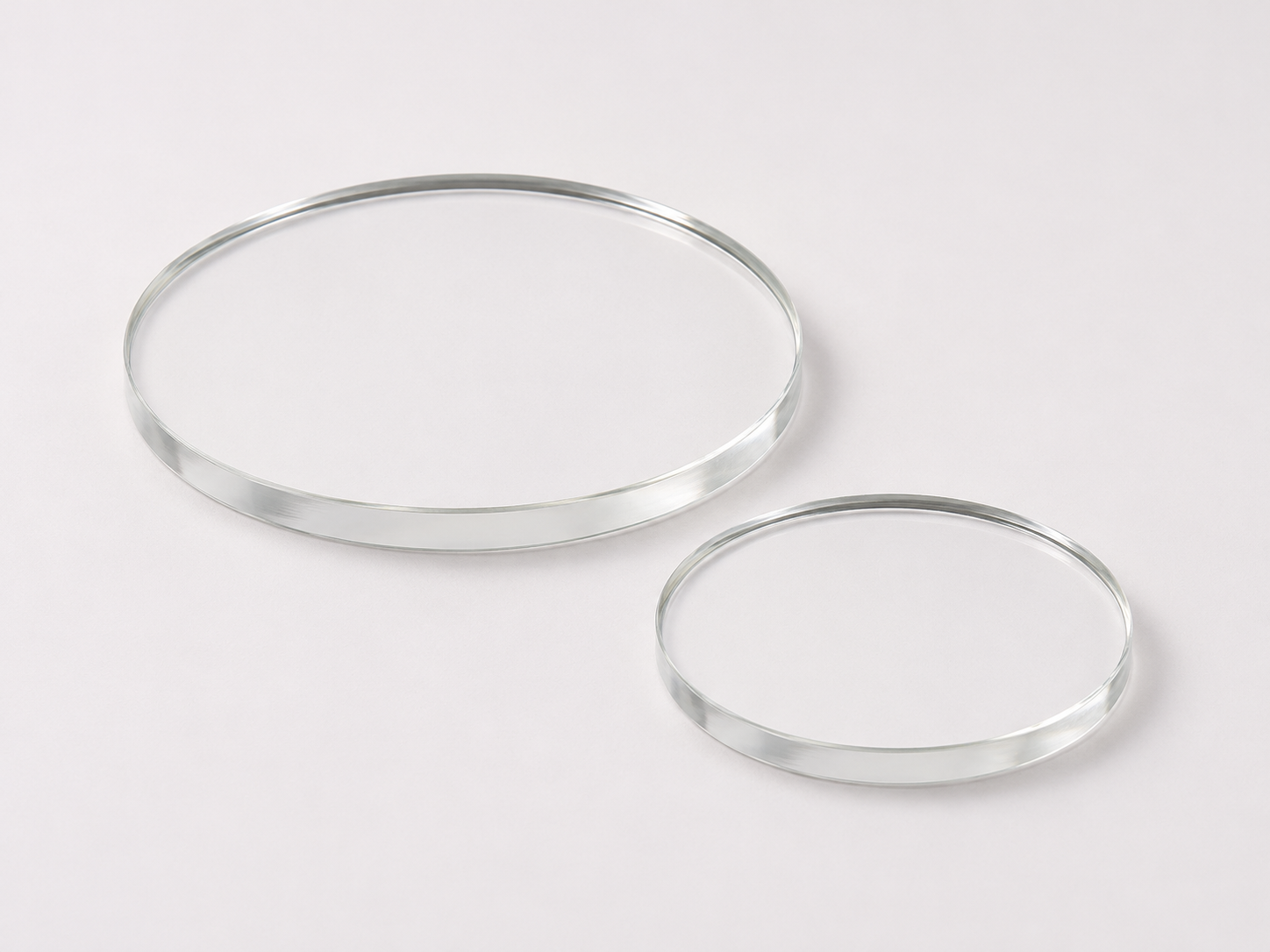
Optical Glass (K9, B270, D263T)
The cost-effective choice for visible and near-infrared filters and windows, transmitting from 370 nm.
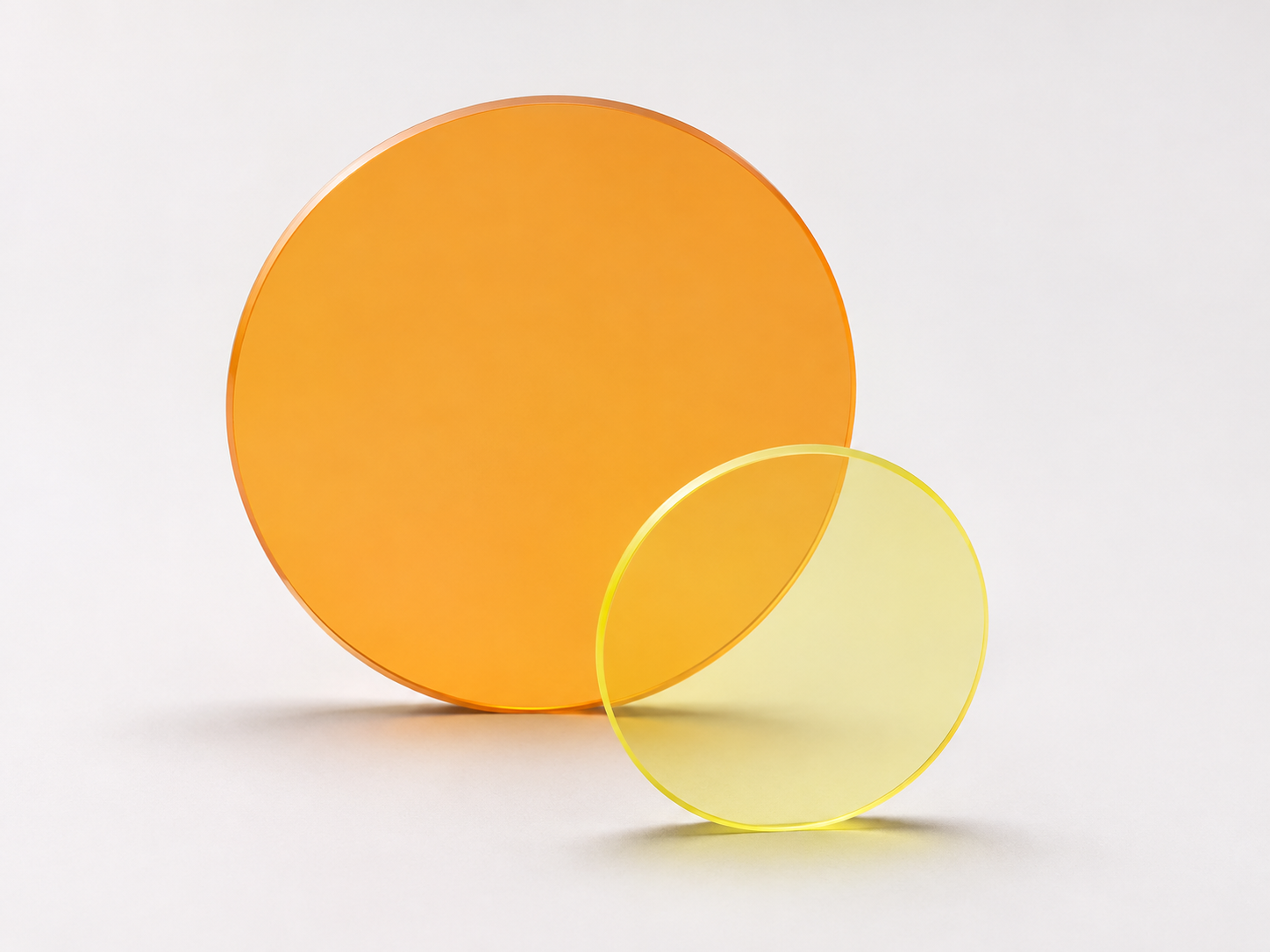
Colored Glass
Absorbing glass for longpass and bandpass filters, cut and polished like any other substrate. Learn more
Tolerances You Can Specify
Size and thickness
Rounds, squares and custom outlines cut to your drawing, typically 0.3 to 3.0 mm thick for filters. In-house fabrication covers parts from 2 to 350 mm, and dicing goes down to 1.0 mm squares. Lenses from 2 to 200 mm in diameter, held to −0.03 mm.
Surface flatness
Polished flats to λ/10 at 633 nm, with transmitted wavefront down to 1/10 wave. Lenses are polished to λ/4 surface accuracy.
Parallelism and wedge
Parallel faces held to 5 arc seconds or better, or a set wedge when you want one to suppress ghost reflections.
Surface quality
Scratch-dig to 60-40 as standard, and 40-20 on our fused silica laser windows. Tighter grades on request.
 P13 · IMAGE PENDINGInterferometer Fringes on a Polished Flat
From Prototype to Volume Production
Many filters reach the customer ready to install. We can mount them in rings, cement or laminate two pieces together, and assemble them into holders to your drawing.
- Prototype quantities from 10 pieces
- Production volumes of 10,000 pieces and more
- Batch records and traceability from raw glass to finished part
- 100% inspection at every stage
The same process that makes your first prototypes makes your production run. Each batch is cut, polished and coated with recorded settings, so the thousandth part matches the first one you approved.
Tell us your annual volume early. It helps us plan raw glass, coating runs and packaging, and it is the biggest single factor in unit cost.
 P14 · IMAGE PENDINGFilter Pressed into a Retaining Ring
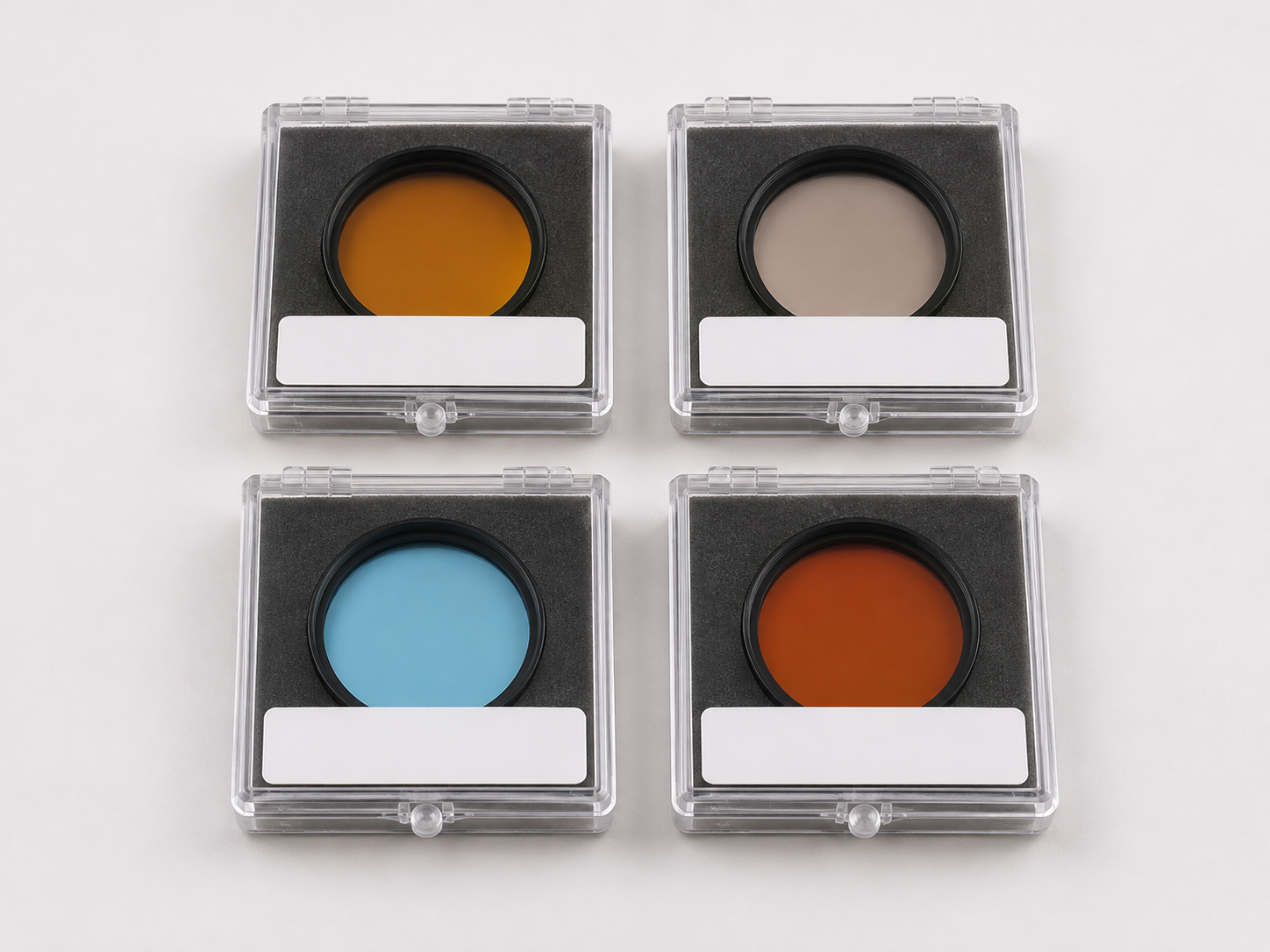 P15 · IMAGE PENDINGFinished Filters Packed in Single Boxes
Substrates and Windows Only
You do not have to buy a coating to use our glass. We supply cut and polished substrates and uncoated windows to coating houses, instrument makers and labs, in the same materials and tolerances listed above.
Send us the material, size, thickness, flatness and surface quality you need, plus the quantity. If you are not sure which material fits, tell us the wavelength range and environment and we will recommend one.
Start With the Glass
Send us a drawing or a short description: material, size, thickness, tolerances and quantity. We will reply with a quote and, if it helps, a suggestion for making the part easier or cheaper to produce.